Iron Deficiency and Exercise: What ELITE Fitness Clients Need to Know
Over the past few months, iron deficiency has become a common topic during client check ins at ELITE Fitness Alliance. Many people come in feeling frustrated because they are:
- Constantly tired
- Struggling through workouts
- Feeling short of breath
- Recovering slowly
- Losing energy despite eating “healthy”
In some cases, iron deficiency may be part of the picture.
For active adults, especially women and adults over 40, low iron levels can significantly impact exercise performance, recovery, and overall quality of life.
The good news is that with the right medical guidance, nutrition, and exercise adjustments, many people start feeling noticeably better.
What Is Iron Deficiency?
Iron is essential for carrying oxygen throughout your body.
According to the Cleveland Clinic, iron helps your body produce hemoglobin and myoglobin, which transport oxygen to your tissues and muscles. Without enough iron, your body struggles to deliver oxygen efficiently.
As a result, workouts can feel much harder than they should.
Common Signs of Iron Deficiency
Many symptoms show up first during exercise or physical activity.
Common signs include:
- Fatigue during workouts
- Shortness of breath
- Dizziness or lightheadedness
- Elevated heart rate
- Feeling weak despite training consistently
- Poor recovery
- Reduced endurance
- Difficulty building strength
The Mayo Clinic notes that iron deficiency can affect oxygen delivery throughout the body and reduce physical performance.
Why Active Adults and Women Are More At Risk
Iron deficiency is especially common among:
- Women with menstrual cycles
- Vegetarians and vegans
- Endurance athletes
- Adults with digestive conditions
- People with low calorie intake
According to the Mayo Clinic, vegetarians and women are among the groups at higher risk for iron deficiency anemia.
Research in athletes has also shown that iron deficiency can reduce aerobic performance and VO2 max.
How Iron Deficiency Affects Exercise Performance
Iron is directly tied to oxygen delivery and energy production.
When iron levels are low:
- Muscles fatigue faster
- Recovery slows down
- Cardio capacity drops
- Strength output decreases
Even mild iron deficiency can impact performance before anemia fully develops.
Many active clients notice:
- They cannot push as hard
- Heart rate climbs unusually fast
- Workouts feel harder than normal
This is one reason why fatigue should never automatically be dismissed as “just getting older.”
Should You Exercise If You Have Iron Deficiency?
This depends on the severity of the deficiency and your symptoms.
Trusted medical sources generally recommend modifying exercise intensity rather than completely avoiding movement in most mild to moderate cases.
According to the Mayo Clinic, regular physical activity is still beneficial for overall health, but severe fatigue, dizziness, or shortness of breath should be evaluated medically.
At ELITE Fitness Alliance, we often recommend:
- Lower intensity training temporarily
- More recovery focused sessions
- Strength training with controlled pacing
- Walking and mobility work when energy is low
However, severe iron deficiency or anemia should always be managed with a physician.
Best Exercises During Iron Deficiency Recovery
Many clients feel better focusing on:
- Walking
- Mobility work
- Moderate strength training
- Controlled interval work
- Lower intensity conditioning
In contrast, very high intensity workouts may feel significantly harder while iron levels are low.
The goal during recovery is not to stop moving completely. Instead, it is to train intelligently while supporting recovery.
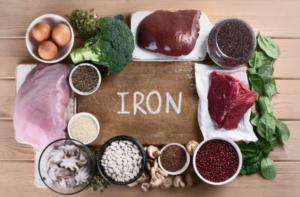
Best Foods for Iron Deficiency
Nutrition plays a major role in improving and maintaining healthy iron levels.
Heme Iron Sources (More Easily Absorbed)
These are animal based sources of iron.
Best options include:
- Lean red meat
- Beef
- Turkey
- Chicken thighs
- Seafood
- Sardines
- Tuna
The Mayo Clinic notes that iron from animal foods is generally absorbed more efficiently than plant based iron.
Vegetarian Iron Sources
Plant based eaters can absolutely improve iron intake, but absorption matters.
Good vegetarian options include:
- Lentils
- Tofu
- Tempeh
- Chickpeas
- Black beans
- Pumpkin seeds
- Spinach
- Iron fortified cereals
However, non heme iron from plants is absorbed less efficiently.
Because of this, pairing iron rich foods with vitamin C becomes extremely important.
Foods That Improve Iron Absorption
Vitamin C can significantly increase iron absorption.
Helpful combinations include:
- Spinach with citrus
- Lentils with peppers
- Iron supplements with orange juice
- Beans with tomatoes
According to the Mayo Clinic, vitamin C helps the body absorb dietary iron more effectively.
Foods and Habits That Can Reduce Iron Absorption
Some habits may interfere with iron absorption, especially around meals or supplements.
These include:
- Coffee
- Tea
- Large calcium intake around iron rich meals
- Certain antacids
The Mayo Clinic recommends avoiding coffee, tea, and antacids close to iron supplementation.
Should You Take Iron Supplements?
Iron supplements can help in some cases, but they should not be started blindly.
The Cleveland Clinic warns that too much supplemental iron can cause digestive problems and other complications.
This is why proper blood work matters.
Testing may include:
- Ferritin
- Hemoglobin
- Iron saturation
- Complete blood count
Always work with a healthcare provider before starting supplementation.
What We See at ELITE Fitness Alliance
Many clients assume they are:
- Out of shape
- Lazy
- Aging poorly
When in reality, underlying nutritional deficiencies may be contributing to low energy and poor recovery.
Once clients:
- Improve nutrition
- Address deficiencies
- Adjust training intensity appropriately
They often notice major improvements in:
- Energy
- Recovery
- Strength
- Workout performance
The Bottom Line
Iron deficiency can significantly affect:
- Exercise performance
- Recovery
- Energy levels
- Overall quality of life
The good news is that many cases improve with:
- Proper medical guidance
- Nutrition adjustments
- Smarter exercise programming
If workouts have suddenly started feeling unusually difficult, it may be worth discussing iron levels with your healthcare provider.
Research and Medical Sources
- Mayo Clinic
- Cleveland Clinic
- National Institutes of Health Office of Dietary Supplements
- Athlete iron deficiency and VO2 performance research
At ELITE Fitness Alliance, we help clients train intelligently while supporting long term health, recovery, and performance.
If you want more evidence based fitness and nutrition strategies:
Visit: https://www.elitefitnessalliance.com/blogs/
Or reach out to learn how we personalize training around your body and your goals.
Large fitness classes can be energetic and motivating, but they are not the right fit for everyone. When a class has dozens of people, it can be…
Fitness professionals and individuals considering GLP-1 weight loss programs often have many questions regarding how exercise and nutrition can…